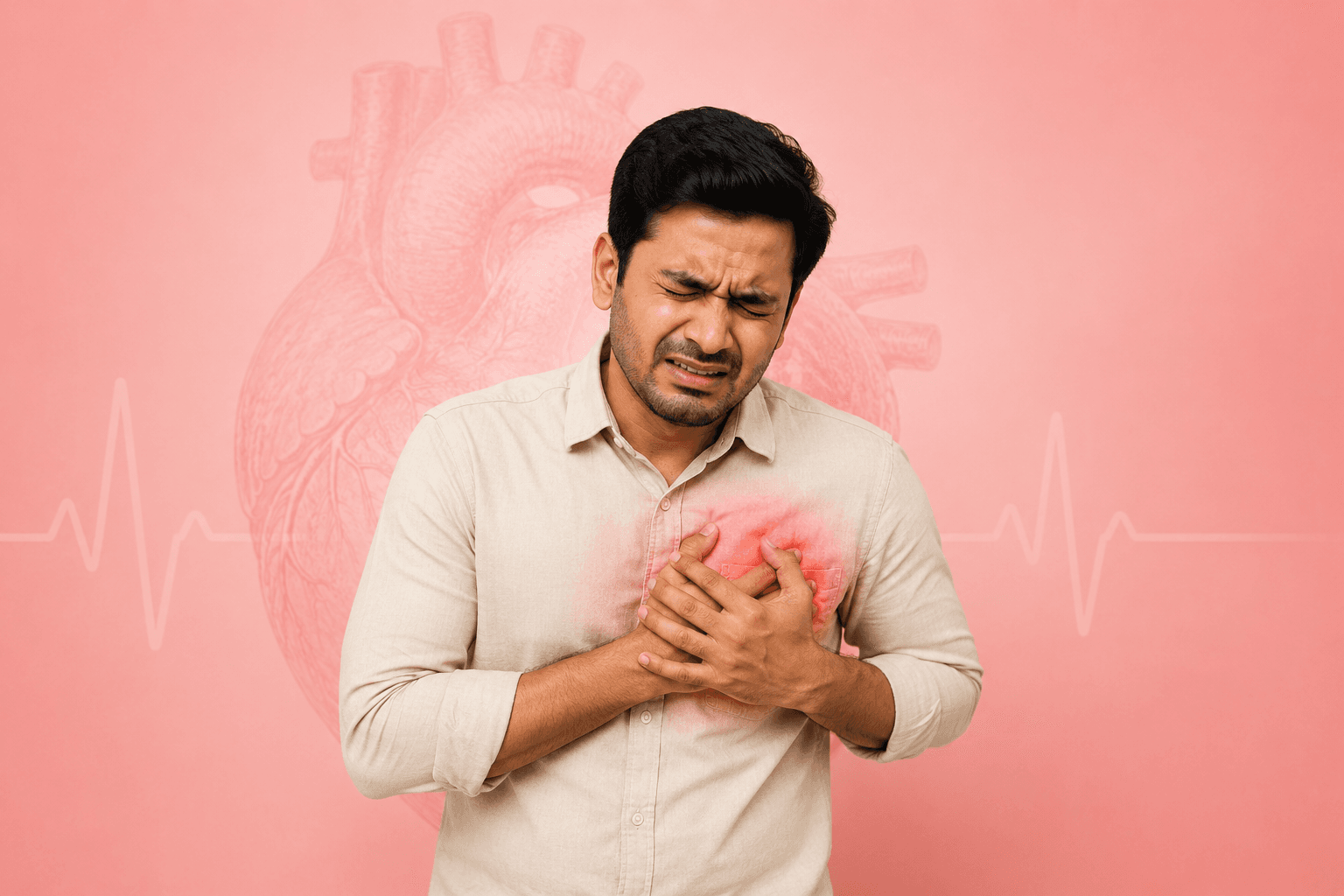
Cardiac Arrest Warning Signs: Symptoms You Should Never Ignore
Medically reviewed by
Dr. Durgadevi
Cardiology · Iswarya Hospital
Cardiac arrest is a life-threatening emergency that occurs suddenly and requires immediate medical attention. Many people ignore early warning signs, assuming they are caused by stress, acidity, or fatigue. Recognizing symptoms early and acting quickly can help save lives.
Cardiac arrest is a life-threatening emergency that occurs suddenly and requires immediate medical attention. Many people ignore early warning signs, assuming they are caused by stress, acidity, or fatigue. Recognizing symptoms early and acting quickly can help save lives.
What Is Cardiac Arrest?
Cardiac arrest occurs when the heart suddenly stops beating effectively, leading to loss of blood flow to the brain and other vital organs. It is a medical emergency that can become fatal within minutes if not treated immediately.
Common Warning Signs of Cardiac Arrest
Warning signs can appear minutes, hours, or even days before cardiac arrest. Common symptoms include:
Chest pain or pressure
Pain spreading to the left arm, shoulder, jaw, or back
Shortness of breath
Excessive sweating
Sudden dizziness
Nausea or vomiting
Unusual tiredness or weakness
Some people, especially women and diabetic patients, may experience mild or unusual symptoms.
Major Causes of Cardiac Arrest
Several lifestyle and medical conditions increase the risk of heart disease:
1. High Blood Pressure
Uncontrolled blood pressure damages blood vessels over time.
2. High Cholesterol
Excess cholesterol can block heart arteries.
3. Diabetes
High blood sugar increases the risk of heart complications.
4. Smoking
Smoking significantly damages the heart and blood vessels.
5. Obesity & Lack of Exercise
Sedentary lifestyle and excess weight increase heart strain.
6. Stress
Chronic stress may contribute to heart-related problems.
What Should You Do During a Cardiac Emergency?
If someone experiences warning signs:
Seek emergency medical help immediately
Do not ignore persistent chest pain
Keep the patient calm
Avoid self-medication without medical advice
Immediate medical attention and CPR can significantly improve survival chances.
Advanced Treatments Available in Cardiology
Modern cardiology offers several life-saving treatments, including:
Angiogram
Angioplasty & stenting
Interventional cardiology procedures
Bypass surgery
Cardiac rehabilitation
Timely intervention improves survival and recovery.
How to Prevent Heart Disease
Simple lifestyle changes can greatly reduce heart risk:
Eat a heart-healthy diet
Exercise regularly
Avoid smoking and alcohol
Maintain healthy body weight
Control diabetes and blood pressure
Get regular cardiac checkups
When Should You Consult a Cardiologist?
Consult a cardiologist if you experience:
Frequent chest discomfort
Breathlessness
Palpitations
High BP or diabetes
Family history of heart disease
Unexplained fatigue
Final Thoughts
Cardiac arrest can occur suddenly, but early warning signs should never be ignored. Quick recognition, emergency medical care, regular heart checkups, and a healthy lifestyle can help reduce risks and save lives.
Tags:
Consult Our Oncology / Cancer Centre Specialists
Book an appointment with our expert team at Iswarya Hospital, OMR Chennai.
Explore our Oncology / Cancer Centre services →