Retinal Detachment Treatment in Chennai
What is Retinal Detachment? Retinal detachment is an eye emergency in which the retina, the light-sensitive layer at the back of the eye, peels away from its normal position. When this happens, the detached retina stops working properly, and vision can be permanently lost if it is not repaired quickly. At Iswarya Hospital, OMR Chennai, our Ophthalmology specialists diagnose and treat it.
It most often starts with a tear in the retina that lets fluid seep underneath. It is more likely in people who are very short-sighted, have had cataract surgery or an eye injury, or are middle-aged or older. Warning signs include a sudden shower of new floaters, flashes of light, and a dark shadow or curtain spreading across part of your vision. Retinal detachment is usually painless, so people may delay seeking help. Early treatment of a retinal tear with laser or freezing (cryotherapy) can prevent a detachment, while a detachment usually needs surgery to reattach the retina.
What are the symptoms of Retinal Detachment?
- Sudden vision loss
- Floaters
- Flashes of light
- Shadow in vision
What causes Retinal Detachment?
- High myopia (strong short-sightedness)
- Previous cataract or other eye surgery
- Eye or head injury
- Age-related changes in the vitreous gel inside the eye (posterior vitreous detachment)
- Previous retinal detachment or a family history of it
- Advanced diabetic eye disease (tractional detachment)
How is Retinal Detachment diagnosed?
- Dilated retinal examination by an eye specialist
- Indirect ophthalmoscopy and slit-lamp examination
- Ultrasound (B-scan) of the eye if the view is unclear
- OCT scan of the retina
When should you see a doctor for Retinal Detachment?
For severe, sudden or rapidly worsening symptoms, do not wait for an appointment callback. Seek emergency care. For a routine concern, our care team can help you choose the appropriate specialist. This page cannot diagnose your symptoms.
How is Retinal Detachment treated at Iswarya Hospital?
Iswarya Hospital's Ophthalmology department provides comprehensive eye care services including cataract surgery using phacoemulsification (micro-incision technique), LASIK laser vision correction, glaucoma management, diabetic retinopathy screening and treatment, retinal detachment surgery, squint correction, and paediatric eye care. Our ophthalmologists use advanced diagnostic equipment including OCT, fundus photography, and corneal topography.
Ophthalmology specialists for Retinal Detachment
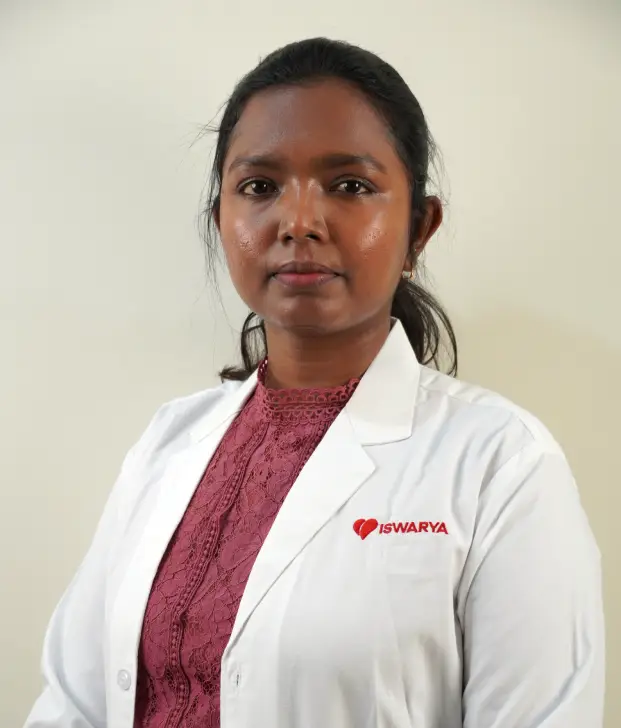

MBBS, MS (Ophthalmology), Fellowship (Cornea & Refractive Surgery)
9+ Years Experience
Frequently asked questions about Retinal Detachment
How urgent is a retinal detachment?
It is an emergency. If you notice sudden new floaters, flashes or a shadow in your vision, see an eye specialist the same day, as early repair gives the best chance of saving sight.
Are all floaters a sign of retinal detachment?
No. A few long-standing floaters are common and usually harmless. A sudden increase in floaters, especially with flashes or a shadow, needs an urgent eye check.
How is retinal detachment treated?
Treatment depends on the type and extent of the detachment. Options include laser or cryotherapy for tears, injecting a gas bubble (pneumatic retinopexy), scleral buckling and vitrectomy surgery.
What should I expect after surgery?
Recovery can take several weeks, and some people must keep a specific head position if a gas bubble is used. Air travel and travel to high altitudes must be avoided while a gas bubble is in the eye.
Sources and further reading
ℹ️ This information is for educational purposes only and does not constitute medical advice. Always consult a qualified healthcare professional for diagnosis and treatment.
Plan your first visit
Not sure which specialist to see? Tell our care team the reason for your visit and we will help you choose.
- Bring previous prescriptions, relevant test reports or scan images, a medication list and photo ID.
- If you plan to use insurance, bring your policy details. OPD, tests and admission benefits depend on your individual plan and approval.
- Your first consultation determines which tests or treatments are needed; not everyone needs every test listed on this page.
Appointments are requests until confirmed. In a medical emergency, call 044 2025 2025 or go to the nearest emergency department.